
scanveer features
Most Accurate Food Scanner App: How Verification Works
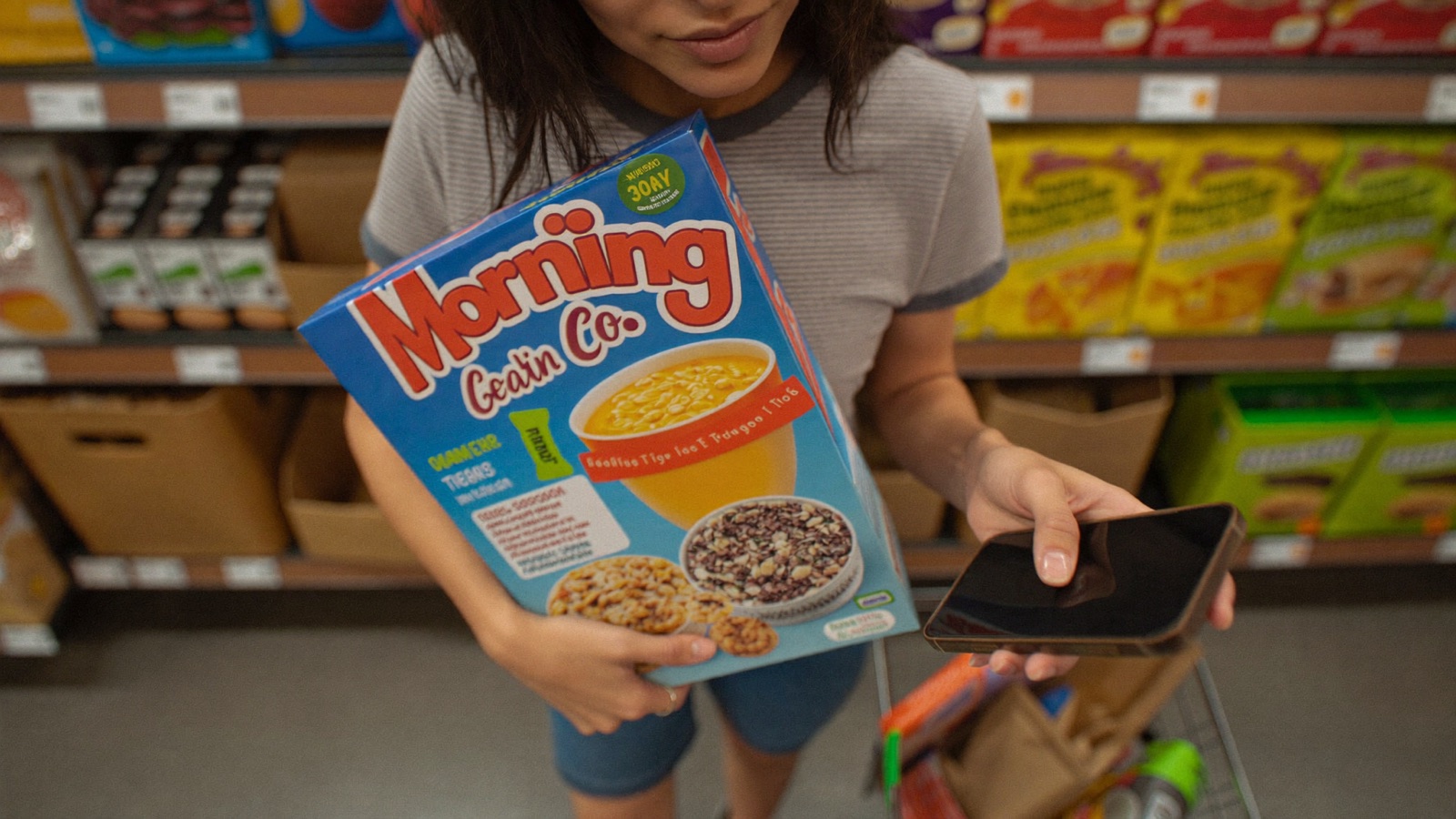
The most accurate food scanner app is the one that verifies its data before scoring. ScanVeer cross-checks every barcode against Open Food Facts, USDA, and FDA records, normalizes serving sizes, rates its confidence in each data field, and flags disagreements for human review instead of guessing.
Quick facts
- What it is
- ScanVeer's data-checking layer that runs before any health score is calculated
- Sources compared
- Open Food Facts, USDA FoodData Central, FDA label data
- Core technique
- Cross-checking fields and normalizing serving sizes to per-100g
- Confidence rating
- Scored per data field, not per product
- On disagreement
- Product flagged for human review — never averaged or guessed
- Coverage
- Food, cosmetics, and supplements in one app
- Cost
- Free, with no brand payments influencing scores
Key takeaways
- Scanner accuracy depends on data quality, not the barcode camera — almost any phone can read a barcode.
- ScanVeer's Verification Engine compares each product across Open Food Facts, USDA FoodData Central, and FDA label data.
- Serving-size normalization converts all nutrition data to a common per-100g basis so scores compare fairly.
- ScanVeer rates confidence field by field, so one questionable number doesn't silently distort a whole score.
- When independent sources disagree, ScanVeer flags the product for human review rather than picking a side.
In this article
What Makes a Food Scanner App Accurate?
Searching for the most accurate food scanner app usually starts with the wrong question. Nearly every app can read a barcode — that part is a solved problem. The real challenge is what happens next: the quality of the data attached to that barcode.
Most scanner apps pull product information from large databases. Some entries come from manufacturers; others are added by volunteers photographing labels at home. That mix creates errors — outdated ingredient lists after a recipe change, serving sizes entered in the wrong units, or missing nutrient fields.
A health score is only as good as its inputs. If an app scores a cereal using sodium data from an old formulation, the number looks confident but is quietly wrong.
So accuracy really comes down to three things:
- Data sources: where the product information comes from
- Error checking: whether anything verifies that data before a score is calculated
- Transparency: whether the app admits what it doesn't know
Our 2026 guide to food health scanner apps covers the wider landscape. This article focuses on verification, because it's what separates a genuinely accurate app from one that just looks precise.
How ScanVeer's Verification Engine Cross-Checks Every Barcode
ScanVeer treats every barcode lookup as a claim to be checked, not a fact to be trusted. Its Verification Engine pulls the same product from multiple independent sources — Open Food Facts (a large open, crowdsourced database), USDA FoodData Central (the U.S. government's nutrient database), and FDA label data — then compares them field by field.
Cross-checking simply means looking for agreement. If three independent records all say a granola bar has 12g of sugar per serving, that number is very likely right. If one says 12g and another says 4g, something needs a closer look.
The process runs in four steps:
- Match the barcode across all connected databases
- Normalize serving sizes to a common per-100g basis
- Compare key fields: sugars, sodium, saturated fat, additives, allergens
- Score how strongly the sources agree on each field
Serving-size normalization matters more than it sounds. One database may list nutrition "per cookie" and another "per 30g." Converted to the same basis, real conflicts become visible — and false conflicts disappear. Only after this check does ScanVeer calculate its 0-100 score.
Confidence Scores and Human Review, Explained
Most apps assign one score and present it with total certainty. ScanVeer instead rates its confidence in each individual data field. Sugar content confirmed by two independent sources gets high confidence; a fiber value found in only one unreviewed entry gets lower confidence and less ability to swing the final score.
This per-field approach means one bad number can't silently corrupt an otherwise solid rating — a common failure in apps that treat every database entry as equally reliable.
When sources disagree beyond a set threshold, the Verification Engine doesn't average the values or pick a favorite. It flags the product for human review, where a person checks the actual packaging. That's slower, but it's the honest option.
Being honest also means admitting limits: no database is perfect, and products get reformulated faster than any database updates. The FDA's Nutrition Facts label on the physical package is always the ground truth, and ScanVeer is designed to converge on it — not to replace it.
The full methodology, including how verified data feeds the 0-100 score, is published openly at scanveer.com/how-we-score.
How to Judge Scanner Accuracy Yourself
You don't have to take any app's word for it — including ours. A few practical tests reveal which food scanner apps are accurate and which just seem it:
- Spot-check a scan. Compare the app's numbers against the physical Nutrition Facts label on a product you own.
- Check the serving basis. Confirm whether values are per serving or per 100g; mismatches here cause most "wrong" scores.
- Look for a published methodology. An app that won't explain its scoring can't be audited.
- Ask who pays. Apps funded by brand partnerships have a conflict of interest — we cover this in why independent scoring matters.
- Scan something ambiguous. A trustworthy app shows uncertainty on obscure products instead of inventing a confident score.
ScanVeer is built to pass exactly these tests: independent with no brand payments, transparent methodology, and verification before scoring — across food, cosmetics, and supplements in one free app. If accuracy is the reason you're choosing a scanner, download ScanVeer free and run the spot-check yourself on the next product you buy.
Scan it before you buy it
ScanVeer gives any food, cosmetic, or supplement an instant 0–100 health score from unbiased data. Free and independent — brands can't pay for scores, ever.
Download ScanVeer freeFrequently asked questions
What is the most accurate food scanner app?
Accuracy depends on data verification, not scanning technology. ScanVeer is built specifically for accuracy: it cross-checks every barcode against Open Food Facts, USDA, and FDA data, normalizes serving sizes, and flags conflicts for human review before scoring. Whatever app you choose, prefer one that publishes its methodology and admits uncertainty.
Why do food scanner apps show different scores for the same product?
Two reasons: different scoring formulas and different underlying data. One app may use an outdated ingredient list while another has the current one, and serving-size units often differ between databases. That's why ScanVeer normalizes all data to a per-100g basis and cross-checks sources before calculating a score.
How do food scanner apps get their nutrition data?
Most combine crowdsourced databases like Open Food Facts, government sources like USDA FoodData Central, and manufacturer submissions. Crowdsourced data is broad but uneven in quality — entries can be outdated or mistyped. Apps that verify across multiple sources catch these errors; apps that rely on a single database inherit its mistakes.
Can a food scanner app be wrong?
Yes — any app can be, because products get reformulated and databases lag behind. The physical Nutrition Facts label is always the ground truth. The difference is how an app handles uncertainty: ScanVeer lowers its confidence rating or flags a product for human review rather than displaying a confidently wrong score.
Is ScanVeer more accurate than Yuka and similar apps?
ScanVeer's difference is process: multi-source cross-checking, serving-size normalization, per-field confidence, and human review of conflicts, all documented at scanveer.com/how-we-score. Rather than trusting any app's marketing, spot-check both against a real label. ScanVeer also takes no brand payments, which removes a common conflict of interest.
Does the most accurate food scanner app cost money?
No. ScanVeer's scanning, verification, 0-100 scores, and swap suggestions are free, and core databases like Open Food Facts and USDA FoodData Central are public resources. Be cautious with apps that lock accuracy-related features behind a paywall while earning money from the brands they score.